What Is 8th Pay Commission? Salary, Fitment Factor & Expected Hike Explained
In this Article
The 8th Pay Commission is currently the most discussed topic among Central Government employees and pensioners. With the 7th Pay Commission recommendations having been implemented back in 2016, there is a growing anticipation for the next major salary revision.
In this comprehensive guide, we will explain what the 8th Pay Commission is, when it is expected to be implemented, and how it will impact your salary and fitment factor.
1. Introduction
A Pay Commission is an administrative body set up by the Government of India to review and recommend changes to the salary structure, allowances, and benefits of Central Government employees.
With rising inflation and the increasing cost of living, government employees eagerly await these commissions, which typically occur once every 10 years, to receive a substantial hike in their disposable income.
2. What Is the 8th Pay Commission?
The 8th Central Pay Commission (8th CPC) is the upcoming panel that will be constituted to examine, review, and recommend the revised pay structure for:
- Central Government employees
- Defense personnel
- Pensioners
Who decides it? The Union Cabinet, chaired by the Prime Minister, approves the formation of the commission. Once formed, the commission (usually headed by a retired Supreme Court judge) analyzes economic conditions and submits a report to the government for implementation.
3. When Will the 8th Pay Commission Be Implemented?
Historically, Pay Commissions are constituted every 10 years.
- 7th Pay Commission: Formed in Feb 2014 | Recommendations implemented from Jan 1, 2016
- 6th Pay Commission: Implemented from Jan 1, 2006
Expected Timeline for 8th Pay Commission: Following this 10-year pattern, the 8th Pay Commission’s recommendations are expected to be implemented effectively from January 1, 2026.
However, the government usually forms the commission 2-3 years in advance to give them time to study and prepare the report. Therefore, an official announcement regarding its formation is highly anticipated soon.
4. 8th Pay Commission Fitment Factor Explained
The Fitment Factor is a multiplier used to calculate the revised Basic Pay from the old Basic Pay. It is one of the most critical numbers in any Pay Commission.
- 7th CPC Fitment Factor: 2.57 (Common fitment factor)
- What it meant: If your basic pay was ₹10,000, it became ₹10,000 × 2.57 = ₹25,700.
Expected 8th CPC Fitment Factor: Employee unions are demanding a fitment factor of 3.68. However, experts estimate it could realistically range between 1.92 to 3.0, depending on inflation data and the government’s fiscal capacity.
5. Expected Salary Hike Under 8th Pay Commission
The primary goal of the 8th CPC will be to adjust salaries against the inflation accumulated over the last decade.
Key Expectations:
- Minimum Basic Pay: Currently ₹18,000 (Level 1). Unions are demanding it be raised to ₹26,000 or ₹34,560.
- Allowances: HRA, Travel Allowance, and others will likely see a significant upward revision.
- Pensioners: Minimum pension will also increase proportionally.
There is also speculation about whether the government might move towards an automatic pay revision system (like the Aykroyd formula) instead of a 10-year commission, but no official confirmation exists yet.
6. 7th vs 8th Pay Commission – Comparison Table
Here is a projected comparison based on current demands and trends:
| Feature | 7th Pay Commission (Actual) | 8th Pay Commission (Projected) |
|---|---|---|
| Implementation | Jan 1, 2016 | Jan 1, 2026 (Expected) |
| Fitment Factor | 2.57 | 1.92 - 3.68 (Estimated) |
| Min. Basic Pay | ₹18,000 | ₹21,600 - ₹34,560 |
| Salary Hike % | ~23.55% | 20% - 35% (Expected) |
7. Sample Salary Calculation Under 8th Pay Commission
Let’s illustrate how your salary might change with an example.
Assumption:
- Current Basic Pay (7th CPC): ₹35,400 (Level 6, Cell 1)
- Estimated Fitment Factor: 3.0 (Optimistic Scenario)
Step-by-Step Calculation:
- Identify Current Basic Pay: ₹35,400
- Apply Fitment Factor: ₹35,400 × 3.0
- New Basic Pay: ₹1,06,200
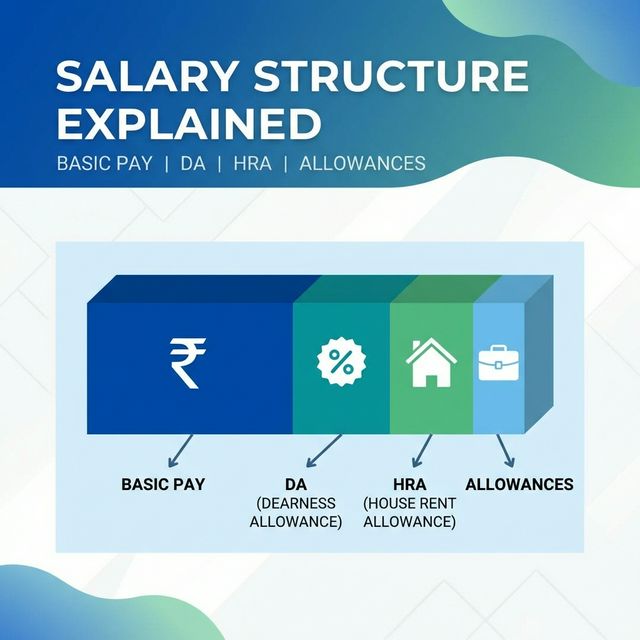
Note: Allowances like DA and HRA would be calculated on top of this new Basic Pay, further increasing the Gross Salary.
8. How to Calculate Your Salary Using 8th Pay Commission Calculator
Calculating this manually for different fitment factors can be confusing. That’s why we have built a dedicated tool for you.
You can instantly check your projected salary for different scenarios (Fitment Factor 2.57, 3.0, 3.68, etc.).
👉 Use our 8th Pay Salary Calculator to estimate your revised salary instantly
9. Important Points Government Employees Should Know
- No Official Notification Yet: As of now, the Government has not officially constituted the 8th Pay Commission.
- Election Year Impact: Policy decisions are often influenced by the political calendar, but salary revisions are primarily economic decisions.
- Conflicting Reports: You might see news saying “No 8th Pay Commission”. The government has stated in Parliament that there is currently no proposal under consideration, which is technically true until they officially form the panel. It does not mean it won’t happen.
10. FAQs (Frequently Asked Questions)
What is the expected fitment factor of 8th Pay Commission?
While unions demand 3.68, realistic estimates suggest a fitment factor between 2.57 and 3.0.
When will 8th Pay Commission be implemented?
It is expected to be implemented from January 1, 2026, following the 10-year cycle.
How much salary will increase in 8th Pay Commission?
The total salary hike could range from 20% to 35%, depending on the final fitment factor and allowance revisions.
Will DA be merged in 8th Pay Commission?
Usually, when DA crosses 50%, allowances are revised. In a Pay Commission, the existing DA is effectively merged into the new Basic Pay via the fitment factor.
Who will benefit from 8th Pay Commission?
All Central Government employees, including railways, defense, postal, and pensioners, will directly benefit. State government employees usually benefit subsequently.
Disclaimer: This article is based on publicly available information, historical trends, and expectations. Final decisions will depend entirely on the official notification by the Government of India.
Curious about your future pay? Don’t wait for the official news! Use our 8th Pay Salary Calculator to see what your future payslip could look like, or check your current dues with our DA Arrears Calculator.